
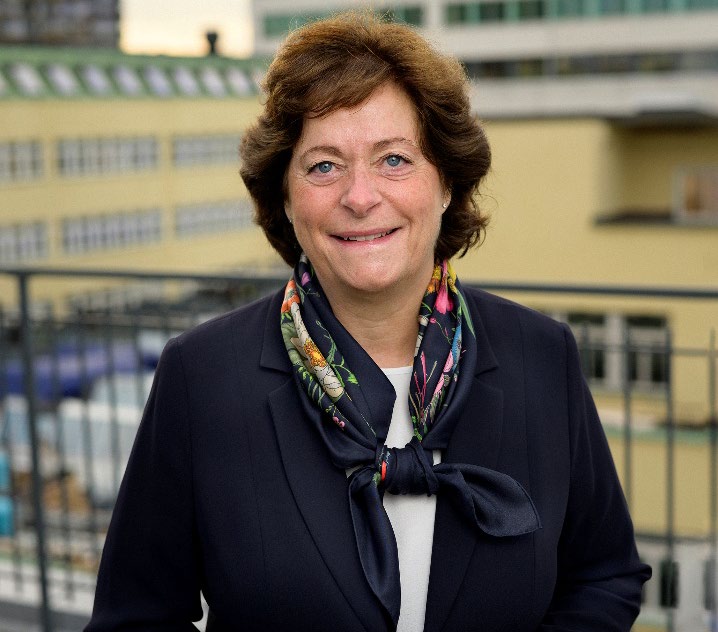
 CEO letter from the Interim Report Q1 2026
“Each year of preserved function is of great significance for patients and their families”
The first quarter of 2026 was characterized by regulatory progress and strong financial performance, driven by increasing royalty income and a milestone linked to global sales of Leqembi.
Increased sales and milestone reached for Leqembi
Global sales of Leqembi continued to increase and reached JPY 26.2 billion during the quarter, generating SEK 161 million in royalty income (+68% compared with Q1 2025) and triggering a milestone payment of EUR 20 million as sales exceeded EUR 500 million during Eisai’s financial year 2025 (April 2025 – March 2026). The royalty income and milestone payment further strengthen our already very strong financial position. This also confirms that Leqembi addresses a significant medical need and that confidence in the underlying science remains strong. At the same time, it provides us with considerable financial flexibility to continue investing long term in our research and development portfolio. The positive financial development is expected to continue. Eisai recently issued a new forecast with expected sales of JPY 143.5 billion for the fiscal year 2026 (April 2026 – March 2027), representing 63% growth year-on-year.
During the quarter, we also saw important regulatory progress globally. In January, Eisai’s supplemental application for subcutaneous initiation treatment with Leqembi Iqlik was granted Priority Review by the FDA. After the end of the quarter, the FDA extended the review period by three months, following a request for additional information. The updated PDUFA date is August 24, 2026. Similar processes are ongoing in Japan and China, where the Chinese regulatory authority has also granted Priority Review for subcutaneous administration of Leqembi.
The application for less frequent maintenance dosing with Leqembi, which was accepted for review by the European Medicines Agency during the quarter, represents an important step toward simplifying treatment following the initiation period. These regulatory milestones are crucial for making the treatment more accessible, less resource-intensive, and better adapted to both patients and healthcare systems.
Strengthened scientific and clinical evidence for Leqembi
At the international AD/PD conference in March, new long-term and real-world clinical data for Leqembi were presented. These showed that patients choose to remain on treatment over a long period and that the disease-slowing effect was sustained for up to four years of treatment. This is particularly important. Alzheimer’s disease is a progressive disease, where each year of preserved function is of great significance for patients and their families. The overall evidence base for Leqembi continues to strengthen, supported by results from clinical trials and real-world clinical practice.
At the same time, regulatory requirements, reimbursement processes, and market realities have demonstrated that introducing new treatments for Alzheimer’s disease is a complex process that varies across countries and healthcare systems. In light of this, it was with great disappointment that we learned of the decision by the Swedish NT Council not to recommend the introduction of Leqembi in Swedish healthcare at this time. As a research and innovation-driven company with roots in Swedish academia, it is painful to note that Swedish patients must wait while patients in many other parts of the world already have access to treatment. Even if the introduction of new therapies often differs between countries and systems, our position remains the same as it has always been: we do not give up. We are convinced that science, clinical experience, and continued dialogue will, over time, also provide Swedish patients with access to treatment.
Continued focus on Parkinson’s related diseases
We continue to focus on exidavnemab, where the Phase 2a study in Parkinson’s disease and Multiple System Atrophy was fully recruited in the quarter. We look forward to receiving the results later in the year and are preparing for Phase 2b. In parallel, we have taken the first steps to prepare BAN2238, an α-synuclein antibody combined with our BrainTransporter™ technology, for clinical development.
BrainTransporter opens new opportunities for growth
BioArctic has always taken a long-term perspective. In parallel with the rollout of Leqembi, we continue to build BioArctic’s future by investing in a strong and growing research portfolio within neurodegenerative diseases, including our BrainTransporter technology. We are currently expanding the platform to enable the transport of molecules other than antibodies into the brain. Behind every project is the same driving force that has brought us here – the ambition to tackle the most challenging diseases of the brain and make a real difference for patients in need. Our BrainTransporter platform enables a new way to reach the brain and has potential far beyond a single program or diagnosis. The strong interest in our research and technology confirms the strength of our strategy and is reflected in ongoing business development discussions and strategic partnerships. For me and the team working on this, these discussions are incredibly exciting and involve thorough scientific, strategic, and commercial considerations.
Overall, the first quarter demonstrates that BioArctic has entered a new phase – with a globally established medicine, a technology platform with significant potential for long term value creation, and a clear ambition to help patients with neurodegenerative diseases. In everything we do, our goal is to contribute to more patients gainining access to treatments that can make a real difference in their lives.
Gunilla Osswald
CEO, BioArctic AB